
Passion Above All
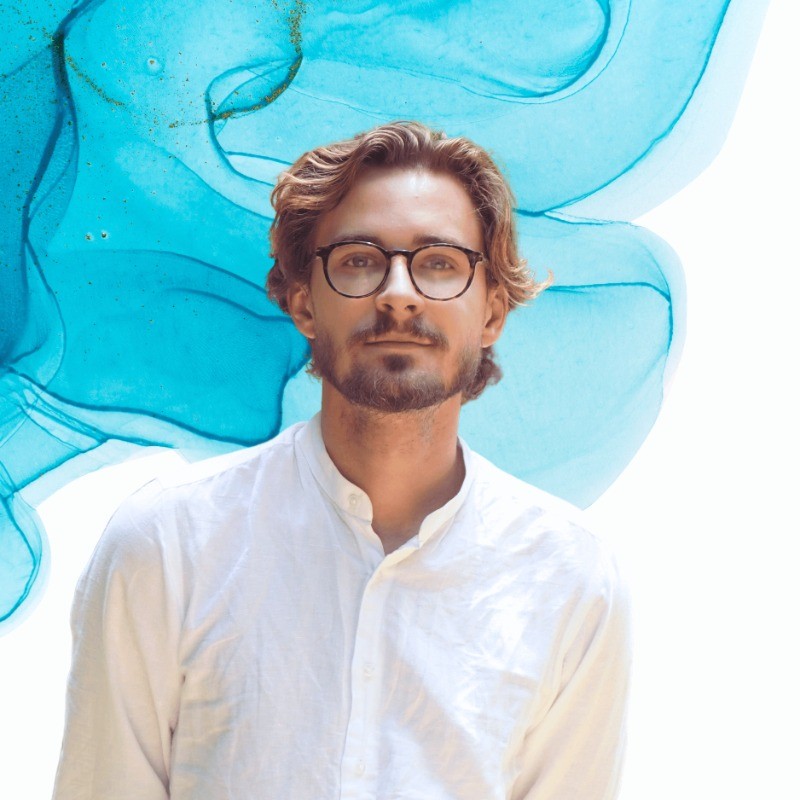
In a world where success is often measured by numbers on a transcript, Bartłomiej Wojciechowski chose a different path. This young chemist from the Lubusz Voivodeship proves that true achievements are born from passion, not from chasing grades. A laureate of the 70th Chemistry Olympiad, a two-time winner of the Environmental Protection and Sustainable Chemistry Olympiad, and a gold medalist at the Lavoisier International Chemistry Olympiad – these are just the tip of the iceberg of his accomplishments. However, his path to success was not without its thorns. “My biggest setback was the previous school year,” Bartłomiej confesses. Despite an impressive list of titles, he missed the Chemistry Olympiad final by just two points.
“At that moment, I thought I wouldn’t get any better and there was no point in trying further.”
However, that setback proved to be a springboard to success. After a few months’ break, Bartłomiej returned to his studies with renewed energy. “I spent the entire summer and school year working in the lab and with books,” he says. The result? The title of laureate of the 70th Chemistry Olympiad, which he considers his greatest achievement.
Great Ambitions
Bartłomiej’s passion is organic chemistry. “What I like about it is that it’s the most logical of all branches, yet probably the most extensive,” he explains. His ambition is to work on drug synthesis, which could contribute to the advancement of medicine in the future. Bartłomiej doesn’t rest on his laurels. He organizes science camps for other students and plans to create the Maria Skłodowska-Curie Chemistry Competition. “I always enjoy the opportunity to pass on knowledge,” he says. The future looks bright for him. He plans to study chemistry abroad, where – he believes – there are greater opportunities for development. He is inspired by Professor Mieczysław Mąkosza, a Polish chemist of international renown. Bartłomiej also has his thoughts on chemical education in Poland.
“The curriculum needs significant reform – in a direction that allows students to better understand chemistry, even at the cost of omitting some more advanced topics,”
– Bartłomiej believes. Interestingly, this chemical genius also has a sporty side. “I’ve been playing volleyball for over 10 years,” Bartłomiej reveals. For him, sport is a way to detach from intensive scientific work.
What Advice Does He Have for Younger Students?
“Focus on what truly excites you. A few years down the line, the success and satisfaction will be far greater than having the highest GPA in school.”
Bartłomiej Wojciechowski’s story is not just about academic successes. It’s a lesson on the importance of following your passion, not giving up in the face of setbacks, and sharing knowledge with others. It’s also a reminder that true success is measured not by numbers on a transcript, but by the joy derived from what you do.
Interview with Bartłomiej Wojciechowski
What has your educational journey been like so far? Were you always a top student?
Bartłomiej: Practically from the beginning of primary school, I was either the best or at least in the top 3 of my year. Back then, the amount of effort I put in didn’t matter much; talent was more important. That’s why, with relatively little effort (certainly from today’s perspective), I always achieved top grades (6.0) and high rankings in school competitions across various subjects. In 8th grade, I was a laureate of four regional academic competitions, and that period was my first contact with Olympiad preparation, or so I thought at the time. From today’s perspective, I consider my primary school years somewhat wasted, though I don’t regret them. Certainly, I wouldn’t spread myself so thin across multiple subjects while also trying to maintain a high GPA. In high school, I focused solely on chemistry because it brought me the most enjoyment, and I’ve stuck with it ever since. In my first year, I still cared about my GPA, but after that, it ceased to matter to me (in the context of applying to universities in the USA, this might have been a mistake, but maintaining it while preparing for the Chemistry Olympiad would have been impossible anyway). Since then, I simply do what I love, and I believe that’s one of the most crucial factors influencing success.
Besides academics, what are your passions and hobbies? How do you like to spend your free time?
Bartłomiej: I’ve been playing volleyball for over 10 years. I used to play at a fairly high level for my age group, but since starting high school, I haven’t pursued it “seriously.” I play on the school team, and it’s a way for me to unwind from my studies. Now I have very little time for volleyball because the last two years have been truly intense, but whenever I find the time and energy, I go to practice to relax a bit, as playing still brings me great joy.
What is your favorite movie, book, or fictional character, and why?
Bartłomiej: I think I like The Witcher the most, both the books and the games. I generally enjoy fantasy, but I particularly appreciate The Witcher for its writing style and its brilliantly constructed universe. I really like the character of Geralt, probably because his morality resonates with me, even though he is a very complex and not entirely unambiguous hero.
What values are most important to you in life?
Bartłomiej: As of today, the most important thing for me is to do something that brings me joy. I’m still at a stage where it’s easy to change my vision for the future, but it gets harder with age. That’s why, when thinking about the future, I try to choose a career that will allow me to go to work with a smile for the next 40 or 50 years, rather than feeling it’s a chore.
What was your greatest success, and what was your biggest setback? What did they teach you?
Bartłomiej: My biggest setback was the previous school year. To many, this might seem amusing, as I was a laureate of the Environmental Protection and Sustainable Chemistry Olympiad, a laureate of the AGH University of Science and Technology ‘Diamond Index’ Olympiad, and a laureate of the Gdańsk University of Technology ‘Win an Index’ Chemistry Competition. But for me, these were just side quests that I didn’t prepare much for. My main goal all along was the Chemistry Olympiad final, for which I prepared continuously for a year. I missed it by two points, and at that moment, I thought I wouldn’t get any better and there was no point in trying further; it would be better to focus on school. I took a long break, and only after a few months did I decide to get back into chemistry. My passion returned, I spent the entire summer and school year working in the lab and with books, and today I am a laureate of the 70th Chemistry Olympiad, which I consider my greatest success. During that time, I sorted many things out in my head; I realized that progress comes with time and I can always improve. Now I love what I do more than ever, and I plan to stick with it permanently.
If you could go back in time, what advice would you give your younger self?
Bartłomiej: I would simply tell myself to focus on what truly excites me, and a few years later, the success and satisfaction will be far greater than having the highest GPA in school and winning titles in regional competitions across half the subjects at once.
Which area of chemistry fascinates you the most, and why?
Bartłomiej: I definitely like organic chemistry the most. Mainly, I like that it’s the most logical of all branches, yet probably the most extensive. This allows for a fairly good general understanding of it, and then provides opportunities to specialize in its narrower ‘sub-branches’. Furthermore, most of the most significant discoveries in chemistry have been in organic chemistry, which demonstrates its importance among other branches.
Do you believe chemical discoveries can be key to solving certain health or environmental problems?
Bartłomiej: Medicine relies heavily on drugs; new preparations or improvements to old ones are constantly being introduced. All these drugs are designed and synthesized by chemists, and only then is their efficacy tested on patients by doctors. Therefore, solutions to many health problems are certainly closely linked to chemical discoveries.
Do you already have an idea of what topic you’d like to explore in your scientific research in the future?
Bartłomiej: For now, I’d like to focus on organic chemistry. I don’t yet have precise preferences regarding the specifics of future scientific work, but I’m very interested in drug synthesis, and it’s quite possible that’s what I’ll pursue.
Is there a famous chemist whose work particularly inspires you?
Bartłomiej: Professor Mieczysław Mąkosza is certainly a great inspiration for me. His work contributed significantly to the development of modern organic synthesis. I admire his international career; he completed his studies in the USSR, lectured at many foreign universities, and received several honorary doctorates, including one from Purdue University. He is an example to me that a Pole can achieve a great career abroad.
How do you assess the state of chemistry education in Polish schools? Do you think anything should change?
Bartłomiej: It cannot be said that chemistry in Polish schools is at a low level; quite the opposite. However, in my opinion, the curriculum has gone in the wrong direction. The curriculum needs significant reform in a direction that allows students to better understand chemistry, even at the cost of omitting some more advanced topics, rather than covering a large amount of material through rote memorization. I don’t want to go into details here, as it would be scientific jargon, but that’s roughly my idea for a change.
What advice would you give to other young people who want to start their journey with chemistry?
Bartłomiej: Based on my several years of experience, I would say that the most important thing is to find the right person who can help you enter the world of chemistry and guide you well. Certainly, the first thing I would advise against is immediately diving into advanced textbooks. At the beginning of your journey, they can be more discouraging than helpful. I only started working through academic textbooks a year ago, and while the increase in knowledge from them is immense, it’s not a good approach for beginners. To start, it’s worth getting involved in a science club at your high school and attending lectures or lab sessions whenever possible.
Have you had the opportunity to participate in any chemistry-related conferences or events? If so, what was most inspiring for you?
Bartłomiej: I participated in many lectures and laboratory sessions led by academic staff at universities in Szczecin and Poznań, and these are some of my best chemistry-related experiences. Beyond personal growth, you get a glimpse of what university studies are like, which helps you answer the question of whether you want to pursue this in the future. Additionally, I’ve led many sessions at my high school. I myself have met many people who helped me greatly, which is why I always enjoy the opportunity to pass that on and share knowledge with others.
When did you decide you wanted to study abroad? What was the main factor that led you to consider this option?
Bartłomiej: This idea was born several years ago, then over time, I stopped thinking about it. The topic resurfaced last year when I decided I wanted to study chemistry. Abroad, there are simply more opportunities for development in my field.
Why are Europe and the USA your preferred countries for studying?
Bartłomiej: The chemical industry is significantly more developed in Europe and the USA than in Poland, with more funds allocated to research. This brings immense opportunities for development, and that is precisely the main reason why I want to study abroad.
How do you assess your chances of getting into your dream universities? Do you already have any achievements that might increase your chances?
Bartłomiej: My CV looks very respectable. I am a laureate of the 70th Chemistry Olympiad, a two-time laureate of the Environmental Protection and Sustainable Chemistry Olympiad, a gold medalist at the Lavoisier International Chemistry Olympiad, a laureate of the 26th and finalist of the 27th AGH University of Science and Technology ‘Diamond Index’ Olympiad, a laureate of the 27th and finalist of the 28th Gdańsk University of Technology ‘Win an Index’ Chemistry Competition, and a distinguished finalist of the 60th Professor Antoni Swiniarski Chemistry Competition. A significant issue is my GPA on my high school transcripts, as it’s not particularly high, and in the context of US university admissions, this could be a major problem. However, the lower grades were a result of my conscious choice. I don’t regret it, although I am aware that this decision might cost me a spot at one of the top universities. I hope to compensate for it with my achievements.
What does the application process for universities in Europe and the USA look like? Have you already started preparations, such as writing essays or taking required tests?
Bartłomiej: In early June, I took my first SAT, and it’s quite possible I’ll need to take it again. I haven’t started writing essays or precisely selecting universities yet. Currently, I’m working on two projects that could strengthen my application. The first is a science camp (my second, as we organized the first one last year for this year’s high school graduates) for students from my high school. It serves as a supplement to regular school learning and will focus on preparing for chemistry matriculation exam problems. I will be one of the lecturers there. The second project is the Maria Skłodowska-Curie Chemistry Competition, which will be organized by my high school, also named after her. I will be the Vice-Chairman of the Main Committee and one of the authors of the competition tasks, and the entire organization is largely my project. The Lubusz Voivodeship, as one of the few in the country, has long lacked any chemistry competition, and for a while, I’ve had the idea to create my own someday. Everything is on track for me to implement this at the beginning of the next school year, as we plan the first stage of the competition for the end of September.
Do you already have an idea of what projects you’d like to work on during your studies?
Bartłomiej: As soon as I start my studies, I want to seek opportunities to contribute to scientific research. At the moment, I’m thinking about focusing on research related to drug synthesis in the future, but of course, these plans may change over time.
What are your plans for the future after completing your studies? Would you like to return to Poland, or perhaps pursue a career abroad?
Bartłomiej: For now, I’m loosely considering pursuing a PhD in some area of chemistry. As for returning to Poland, it’s hard to say, but I think once I leave, I won’t come back to the country, though you never know how the future will unfold.