

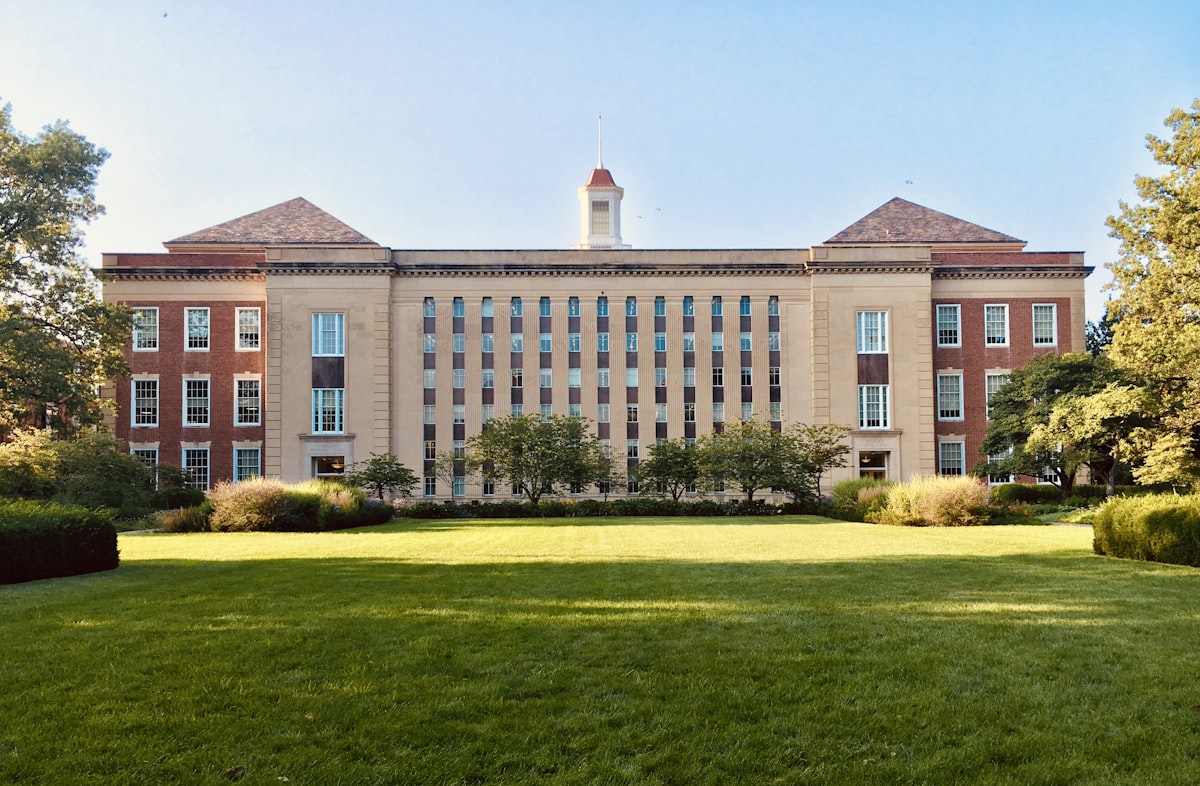
You stand in Harvard Yard, surrounded by red-brick buildings that witnessed the American Revolution, housed eight signers of the Declaration of Independence, and educated eight future US presidents. It’s October, the maple leaves blaze orange and crimson, and the air smells of coffee from the nearby Café Algiers. A student in a crimson hoodie emblazoned with “VERITAS” rushes past you, clutching a stack of books. On a bench beneath the John Harvard statue, someone is solving a quantum computing problem on a tablet. This isn’t a dream – it’s a typical Tuesday in Cambridge, Massachusetts.
Now, for the crucial question every international high school graduate considering applying asks: how much does it all cost? Because the official figure – over $82,000 per year – sounds like the price of an apartment in a major European city, not a year of studies. Let’s be direct: Harvard’s sticker price is daunting. But the truth about Harvard’s costs is completely different from what the headlines suggest, and in this guide, I’ll show you exactly why. Harvard boasts the most generous financial aid system in the world, is need-blind for international students (meaning your financial situation doesn’t impact the admission decision), and families earning below $85,000 per year pay absolutely nothing – zero, zilch, nada. Over 55% of students receive financial aid, and the average grant exceeds $59,000 per year.
In this article, we’ll break down every cost item – from tuition to accommodation, to flights from your home country. We’ll compare this with the costs of studying in Europe, explain how the financial aid system works, what your real chances are for a scholarship as an international applicant, and why Harvard might turn out to be cheaper than studying at many European universities. If you’re considering applying to Harvard, this guide will give you a complete financial overview.
Harvard University – Key Financial Data 2025/2026
Source: Harvard College Financial Aid Office, Harvard University Fact Sheet 2025/2026
Official Cost of Study – Breaking Down the $82,866 Figure
Before we talk about financial aid, let’s take an honest look at the full sticker price – the amount Harvard lists as the official annual Cost of Attendance for undergraduate students in the 2025/2026 academic year. This figure includes everything you need to live for an academic year in Cambridge, Massachusetts, and totals $82,866. Let’s break it down into its components.
Tuition and Fees: $59,550. This is the main item and – let’s be direct – an astronomical sum. Harvard’s tuition alone is higher than the median annual household income in many countries. But remember: this is the catalog price, paid by a minority of students. Harvard employs a model where the tuition paid by wealthier students effectively subsidizes scholarships for others.
Room: $12,424. Harvard requires first-year students to live on campus – in the legendary dormitories around Harvard Yard. Sophomore, junior, and senior year students live in one of the twelve “Houses” – residential communities with their own dining halls, libraries, gyms, and traditions. This is no ordinary dormitory – each House has its own Faculty Dean, organizes events, and fosters bonds that last decades after graduation. The cost includes a furnished room, laundry, and basic utilities.
Board: $7,786. Harvard’s meal plan includes meals in the dining halls of the individual Houses. Annenberg Hall – the enormous, Gothic dining hall for first-years, reminiscent of the Great Hall from Hogwarts – is one of the more iconic campus experiences. Food quality is solid, and vegetarian, vegan, and gluten-free options are standard.
Health Insurance: $4,104. Mandatory for international students. You can waive it if you have equivalent insurance from another source (which, for a student from most countries, is unlikely – national health insurance from your home country typically doesn’t cover medical costs in the USA). Harvard’s health plan is comprehensive and includes visits to Harvard University Health Services (HUHS), psychiatric, and dental care.
Personal Expenses and Travel: $3,002. This item covers clothing, entertainment, phone, minor purchases, and – crucially for international students – flights to your home country. Realistically, if you fly home twice a year (Christmas and summer holidays), a round-trip flight costs $600–$1,200. Harvard officially estimates this item rather conservatively – international students should budget an additional $500–$1,000 for travel.
To put this in perspective, the full annual cost is approximately $82,866, and four years of study would be over $331,000. This sounds like a pure abstraction – but that’s precisely why Harvard’s financial aid system is so revolutionary.
Cost Structure – Harvard 2025/2026
Full Annual Cost of Attendance: $82,866 (approx. €78,400)
Source: Harvard College Financial Aid Office, Cost of Attendance 2025/2026. Exchange rates: 1 USD ≈ 0.92 EUR, 1 EUR ≈ 4.28 PLN (February 2026).
Financial Aid – Why Harvard Might Be Cheaper Than You Think
This is the most important section of this article, and often the one most overlooked by international applicants. Let’s look at the facts: Harvard University boasts an endowment fund worth over $53.7 billion – more than the GDP of many countries. From the income generated by this fund, Harvard finances one of the most generous financial aid programs in the world. And – crucially – Harvard is need-blind for international students. This means the admissions committee makes its decision without any knowledge of the applicant’s financial situation. First, they assess if you’re good enough, and only then do they inquire about money.
What is Harvard’s financial aid system based on? It is exclusively need-based – Harvard does not award athletic or merit-based scholarships. The sole criterion is how much your family can realistically afford to pay. And here’s where the surprises begin:
- Families earning below $85,000 per year – the expected family contribution is $0. Harvard covers 100% of costs: tuition, room, board, books, travel. Literally zero expenses.
- Families earning $85,000–$150,000 per year – the family contribution ranges from 0% to 10% of annual income. With an income of $100,000, your family would pay a maximum of $10,000 per year instead of $82,866.
- Families earning above $150,000 – the contribution increases proportionally, but Harvard considers individual circumstances (other children in college, real estate, debt, medical expenses).
What does this mean for a typical family from a similar income background? For instance, a family with a median household income of approximately $22,000–$25,000 annually. With such an income, your family will, with high probability, pay nothing. Harvard will cover the full annual cost of $82,866 – tuition, on-campus housing, meals in Annenberg Hall, health insurance, and even flights to your home country for Christmas.
Over 55% of Harvard College students receive need-based financial aid, and the average annual grant is approximately $59,000. For the 2024/2025 academic year, Harvard allocated over $246 million to financial aid. Equally important, Harvard employs a no-loan policy – standard aid packages do not include student loans. You receive grants and scholarships that you do not have to repay. Compare this to the British system, where graduates of UCL or Imperial often finish their studies with debts of £40,000–£60,000.
To apply for financial aid, you must complete the CSS Profile (a College Board form) and IDOC (International Documentation) – a detailed description of your family’s financial situation, supported by documents. The process is bureaucratic, but the Griffin Financial Aid Office actively assists international students at every stage. Important rule: submit your documents on time. Deadlines for Regular Decision are usually early February – check the current dates on the Harvard Financial Aid website.
What Do You Really Pay? – Financial Aid by Family Income
Harvard Financial Aid – Income Thresholds and Expected Family Contribution
| Family Income (USD/year) | Family Contribution | Harvard Covers | Real Cost for Student |
|---|---|---|---|
| <$85 000 | $0 | 100% (~$82 866) | $0 / year |
| $85 000–$100 000 | 0–5% of income | ~95–100% | $0–5,000 / year |
| $100 000–$150 000 | 0–10% of income | ~85–95% | $5,000–15,000 / year |
| $150 000–$200 000 | 10–15% of income | ~70–85% | $15,000–30,000 / year |
| >$200 000 | Calculated individually | Depends on circumstances | $30,000+ / year |
| Typical family (e.g., ~$25,000 income) | $0 | 100% | $0 / year |
Source: Harvard College Financial Aid Office 2025/2026. Thresholds are indicative – each case is reviewed individually.
Real Costs for an International Student – Scenarios
Let’s translate the dry figures into concrete scenarios. We’ll take three profiles of families with comparable incomes and see how much they would realistically pay for a year of study at Harvard.
Scenario 1: Family with an income of approximately $25,000/year. This represents a typical middle-income family – two parents working full-time in an average city. With such an income, Harvard covers 100% of costs. Your family pays nothing – zero. Harvard covers tuition, on-campus room, meals in Annenberg Hall, health insurance, textbooks, and even flights. The only thing you need to provide yourself is pocket money for coffee and entertainment – but even for this, Harvard budgets in the aid package. Four years of study at Harvard literally cost your family $0.
Scenario 2: Family with an income of approximately $50,000/year. A well-off family – for example, two parents working in a corporation in a major city. Still below the $85,000 threshold, so the expected family contribution is $0 or a symbolic amount. Harvard covers practically everything. Four years of study: $0–$5,000 total.
Scenario 3: Family with an income of approximately $100,000/year. This represents a high-income family – for example, two parents in managerial positions at large companies, doctors, or lawyers. The family contribution is 0–10% of income, or $0–$10,000 annually. Harvard still covers over 85% of costs. Four years: $20,000–$40,000 total – a significant amount, but a fraction of the full price of $331,464.
Key takeaway: for the vast majority of families with comparable incomes, studying at Harvard is free or nearly free. Paradoxically, Harvard, with its astronomical sticker price, can be cheaper than a year of study at LSE (tuition $28,000+ without financial aid), University of Edinburgh (tuition £28,950 for international students), or even studying in the Netherlands, where EU tuition is €2,500, but living costs are not covered.
Harvard vs. Europe – Cost Comparison
Prospective international students often assume that studying in the USA is financially out of reach, and Europe is the only realistic option. This is flawed thinking – at least for top universities with generous financial aid. Let’s compare the real annual costs for an international student from a typical family (income ~$25,000/year):
Annual Cost of Study – Harvard vs. Europe
Real Cost for an International Student from a Family with ~$25,000/year Income
Source: Official university websites 2025/2026, Harvard Financial Aid Office. Living costs – averaged estimates. Exchange rates: 1 USD ≈ 0.92 EUR, 1 EUR ≈ 4.28 PLN (February 2026).
The comparison is striking. For a family with median income, Harvard is cheaper than every European option – because it’s free. ETH Zurich charges only 1,500 CHF tuition annually, but living costs in Zurich (Europe’s most expensive city) mean €20,000+ per year out of pocket. CBS in Copenhagen charges no tuition for EU students and offers a generous SU grant, but even after deducting the SU, you’re left with €5,000–€8,000 annually to cover. At Harvard – zero.
Of course, there’s one giant “but”: you have to get in first. Harvard’s acceptance rate is 3.6% – that’s a 96.4% chance of rejection. But if you make it through admissions, money shouldn’t be a barrier. This is a fundamental difference between the American system (hard to get in, easy to pay) and the European system (easier to get in, but you pay yourself). If you want to learn more about the application process, read our detailed Harvard admissions guide.
Hidden Costs – What Harvard Doesn’t Cover (and What It Covers That You Might Not Know)
Let’s delve into the details that official brochures don’t always mention. Harvard is exceptionally transparent about costs, but a few items deserve additional explanation from an international student’s perspective.
Travel from Home Country: Harvard officially includes travel costs in the financial aid package – but the amount is determined individually based on distance. For students from Europe, a typical travel allowance is $2,000–$3,000 annually, which covers 2–3 flights from Europe to Boston (via New York or Frankfurt). A round-trip flight is $500–$700 with a layover, $800–$1,200 direct. It’s worth booking early – in October for Christmas, in March for summer holidays.
Textbooks and Materials: Harvard allocates approximately $1,000 annually for books in the COA package. In practice, many textbooks are available for free in Harvard’s libraries (the Widener Library system is one of the largest academic collections in the world), and more and more courses use digital materials. Realistically, you’ll spend $300–$600 annually on books.
Laptop and Technology: Harvard does not require a specific computer, but you practically need a laptop. If you cannot afford to purchase one, Harvard Student Financial Services can finance a laptop as part of your aid package. Many international students purchase a MacBook before leaving – an investment of approximately $1,200–$2,000.
Winter Term (J-Term) and Summer: Harvard has a unique academic calendar with a “January Term” (a 3-week optional semester in January). On-campus housing during this time is free for students receiving financial aid. Summer is a different matter – officially, the campus is closed, but Harvard offers summer programs and grants for summer research (PRISE, PRIMO) and internships. Summer housing costs in Cambridge are $800–$1,500/month, but Harvard covers these as part of research programs.
Visa and Administrative Costs: The F-1 student visa process involves a SEVIS fee of $350 and a consular fee of $185, totaling $535. This is a one-time cost that Harvard does not automatically cover, but the Griffin Financial Aid Office can assist students in difficult situations. The I-20 form (document needed for the visa) is free. Prepare for a visit to the US Embassy in your home country – the interview lasts 3–5 minutes and is conducted in English. You can find more about the visa process in our guide to student visas for the USA.
On-Campus Jobs: Students with an F-1 visa can legally work on campus for up to 20 hours per week during the semester and up to 40 hours during holidays. Harvard offers hundreds of positions – from lab assistantships to work in libraries, dining halls, and administrative offices. The hourly wage is $15–$20. This provides an additional $3,000–$6,000 annually for pocket money. However, Harvard recommends that work not exceed 10–12 hours per week – studies at Harvard are demanding, and you need time for academics.
Financial Timeline – From Application to Harvard
Key Dates and Expenses on the Path to Cambridge, MA
Source: Harvard Admissions, Harvard Financial Aid Office, US Visa Services 2025/2026
External Scholarships and Additional Funding Sources
Harvard’s financial aid is usually sufficient to cover the full cost of study, but it’s also worth knowing about other options – both as a backup and a source of additional pocket money.
Harvard does not award merit-based scholarships – all financial aid is need-based. But external scholarships can supplement your budget. Important note: if you receive an external scholarship, Harvard first deducts it from your expected family contribution, and only if the scholarship exceeds that contribution – does it reduce its own grant. In other words: if your family has a $0 contribution, an external scholarship of $5,000 means Harvard will reduce its grant by $5,000. This isn’t ideal, but it’s still worthwhile – as it’s $5,000 you can allocate to summer travel, additional courses, or savings.
Scholarships worth considering for international students:
- Fulbright Foreign Student Program – a prestigious exchange program, but primarily for master’s and doctoral studies; undergraduate students can apply for other Fulbright programs.
- The Kosciuszko Foundation – a scholarship for study in the USA, covering up to $25,000 annually for living expenses (primarily for Polish-American students or those of Polish descent).
- NAWA (Polish National Agency for Academic Exchange) Programs – grants for student exchanges, though amounts are relatively modest (primarily for Polish citizens).
- Davis United World College Scholars – if you are graduating from a UWC (United World College), you may receive an additional Davis scholarship at Harvard.
- Jack Kent Cooke Foundation – scholarships for outstanding students from less affluent families.
A detailed overview of scholarship options for international students applying to US universities can be found in our guide to scholarships for studying in the USA.
Application Preparation Costs – Investment Before the Investment
Before you even submit an application to Harvard, you need to invest in preparation. These are costs you will incur regardless of whether you get in or not – and it’s worth planning for them in advance.
SAT or ACT: $64.50–$93. Harvard requires an SAT (or ACT) score – you take the test at an authorized center in your home country (e.g., at an American school or testing center). SAT preparation is an investment of several months. Practice with okiro.io – the platform offers full SAT practice tests with detailed score analytics and an adaptive algorithm. Aim for a score of 1500+ to be competitive at Harvard (median for admitted students: 1520–1580). Read our complete SAT guide to plan your preparation.
TOEFL or IELTS: $205–$265. Harvard requires proof of English proficiency, unless your school conducts instruction entirely in English. TOEFL iBT is $205, IELTS Academic – $265. Aim for TOEFL 100+ or IELTS 7.5+. Prepare with prepclass.io – the platform offers full TOEFL and IELTS practice tests with AI feedback. Not sure which test to choose? Read our TOEFL vs. IELTS comparison.
Application fee: $85. Harvard charges an application fee, but grants fee waivers to students in financial need – simply select the appropriate option in the Common App. If your family earns below the median income for your country, you almost certainly qualify for a fee waiver.
CSS Profile: $25. The College Board form needed to apply for financial aid. The first institution costs $25, each subsequent one $16. If you have a fee waiver for the Common App, you automatically receive a fee waiver for the CSS Profile.
Certified translations: approximately $50–$125. Your academic transcripts and high school leaving exam results (e.g., matura) must be translated into English by a certified translator.
Total preparation cost: $400–$600 (approx. €370–€550). This is a real investment – but compare it to the potential return: four years of study at Harvard worth $331,464, fully financed by the university.
What Can You Study at Harvard? – 6 Most Popular Concentrations
Source: Harvard University, QS World University Rankings by Subject 2025. Tuition is identical regardless of concentration.
Key information: unlike many European universities, Harvard does not differentiate tuition based on your major. Regardless of whether you study Computer Science, Economics, or Comparative Literature – tuition is $59,550, and financial aid is identical. At Harvard, you don’t choose your major during the application process – you declare your “concentration” (the equivalent of a major) only at the end of your second year. This gives you two full years to explore different fields before making a decision. More about Harvard’s majors and programs can be found in our guide to Harvard majors.
Student Life in Cambridge – What Do You Really Spend?
Cambridge, Massachusetts – a university town across from Boston, separated by the Charles River – is one of the most intellectually stimulating places on Earth. Within a few blocks of Harvard Yard, you’ll find MIT, dozens of bookshops, cafes filled with people writing dissertations, and restaurants with cuisines from every corner of the world. But what does it look like from a financial perspective?
The good news: if you have full financial aid, your daily expenses are minimal. On-campus housing is paid for, meals in dining halls – paid for, insurance – paid for. What remains are discretionary expenses: coffee at Tatte Bakery ($5), a slice of pizza from late-night Pinocchio’s ($3), an occasional trip to Boston ($2.40 T-pass one-way), AMC movie tickets ($12), or a beer at a bar ($7–$10). Realistically – a student with financial aid spends $100–$200 per month on entertainment and minor purchases. An on-campus job (10–12 hours per week at $17/hour) provides you with $680–$816 per month – more than enough to cover all these expenses.
Harvard offers plenty of free entertainment: guest lectures (from Obama to Elon Musk), concerts at Sanders Theatre, exhibitions at the Harvard Art Museums (free for students), workouts at the Malkin Athletic Center (free), 24/7 access to Lamont Library, House events (often with free food and drinks). A significant part of student life revolves around the House System – each of the twelve Houses has its own dining hall, library, gym, billiard room, and a community that becomes your second family.
The Polish community at Harvard is small but visible. The Polish Society at Harvard organizes cultural events, movie nights, and – importantly – helps new students from Poland acclimate. It’s worth joining even before you leave.
Is It Worth It? – Return on Investment
We’ve discussed the costs, but let’s also talk about what you get in return. Harvard consistently ranks at the top of academic rankings (QS #1 or #2 worldwide depending on the year), but rankings are an abstraction. Here are the specifics:
Network (alumni network): Harvard has over 400,000 living alumni in 190 countries – the largest and most powerful alumni network in the world. Harvard Clubs exist in 62 countries, including Poland (Harvard Club of Poland). This network opens doors that would normally be closed – from internships at Goldman Sachs to meetings with politicians and entrepreneurs.
Career Prospects: The median salary for a Harvard graduate 10 years after graduation is over $95,000 annually. Graduates go on to McKinsey, Goldman Sachs, Google, Meta, startups in Silicon Valley, international organizations, and doctoral programs at the world’s best universities. Harvard is a “target school” for every significant employer on the planet.
Education: 24 departments, over 3,700 courses, a library with 17 million volumes, laboratories worth billions of dollars, professors who are Nobel laureates, Pulitzer Prize winners, and recipients of half a dozen other awards. The liberal arts system means you can combine biology with philosophy, economics with computer science, literature with neurobiology. This is not narrow specialization – it’s an education that prepares you to think about the world on multiple levels.
If you compare this to a cost of $0 for a typical family with comparable income – the quality-to-price ratio is simply unmatched by any other university in the world.
Harvard – Return on Investment in Numbers
Source: Harvard University Fact Sheet, QS Rankings 2025, US DoE College Scorecard
Let’s Be Honest – A Realistic Assessment of Your Chances
This is a section I must write to make this article fair. Harvard offers the best financial aid in the world – but getting in is a different story. A few facts you need to know:
Acceptance rate: 3.6%. Out of ~57,000 applications, Harvard admits ~2,050 students. That’s fewer than 4 out of 100 applicants. Statistically, you have a better chance of winning some lotteries than getting into Harvard. But statistics can be misleading – if you have an academic profile, extracurricular activities, and essays at the right level, your individual chances are significantly higher than 3.6%.
Median SAT for admitted students: 1520–1580. This means you need to be in the top 1% of SAT test-takers worldwide. Prepare intensively – a minimum of 3–6 months of regular practice. The okiro.io platform allows for systematic preparation with full practice tests and analysis of weak points.
Holistic Profile: Harvard does not admit students based solely on grades and test scores. What matters is your story – what you do outside of school, what problems you solve, how you impact your community. International candidates can distinguish themselves with subject Olympiads, social projects, scientific research, artistic, or athletic endeavors. The application essay is your chance to show who you are – not just what your grades are.
My advice: apply, but have a Plan B. Consider other universities with generous financial aid (MIT, Yale, Princeton, Stanford – all need-blind for internationals) and European options as solid alternatives. Applying to Harvard costs $85 (or $0 with a fee waiver) – a small price for a chance at an education worth over $330,000.
Summary – Harvard is Closer Than You Think
Let’s summarize the key takeaways:
Harvard’s sticker price ($82,866/year) is daunting – but irrelevant for most international students. Harvard’s financial aid system is the most generous program in the world: need-blind for international students, no-loan, 100% cost coverage for families below $85,000 income. For a typical family with comparable income, Harvard is free. Not cheaper – free.
Harvard can be cheaper than studying in Europe. Paradoxically, a university with $59,550 tuition costs an international student less than UCL with £26,000 tuition, ETH Zurich with €20,000/year living costs, or even Maastricht with €2,530 EU tuition plus living costs. The key: financial aid covers everything.
The catch: you have to get in. An acceptance rate of 3.6% means Harvard is extremely selective. But if you have a strong profile – an SAT score of 1500+, excellent essays, impressive extracurricular activities – your individual chances are significantly higher. And remember: the application cost is $85 (or $0 with a fee waiver). That’s a small risk for a potential reward worth over $330,000.
Next Steps
- Check how much your family would actually pay – Harvard offers a Net Price Calculator on its website. Enter approximate financial data and see an estimated aid package in 5 minutes.
- Start your SAT preparation – practice with okiro.io, aim for 1500+. This is a key element of the application. Read our complete SAT guide.
- Prepare for TOEFL or IELTS – use prepclass.io for AI-feedback preparation. Aim for TOEFL 100+ or IELTS 7.5+.
- Read our admissions guide – How to Get into Harvard step-by-step, from an international applicant’s perspective.
- Consider a Plan B – also apply to other universities with generous financial aid (MIT, Yale, Princeton) and to European options. A good plan is a plan with many options.
Don’t let the sticker price discourage you. The biggest barrier on the path to Harvard isn’t money – it’s the lack of courage to apply. And that only costs $85.